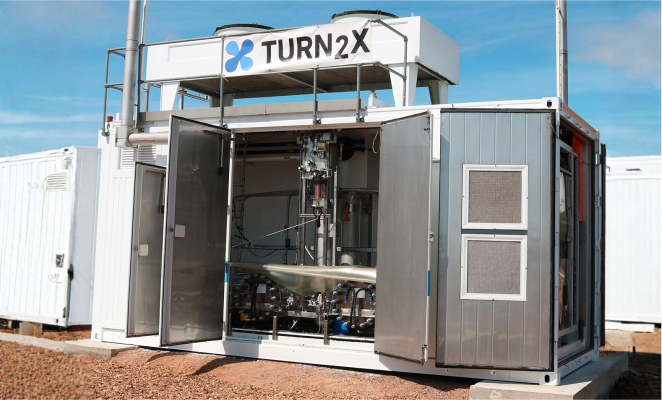
First Momentum led the pre-seed round in encosa, the Munich-based full-service battery storage company. Now, encosa has closed €25M in seed funding, signed millions of project volume, and is scaling the German Mittelstand's most critical energy infrastructure.

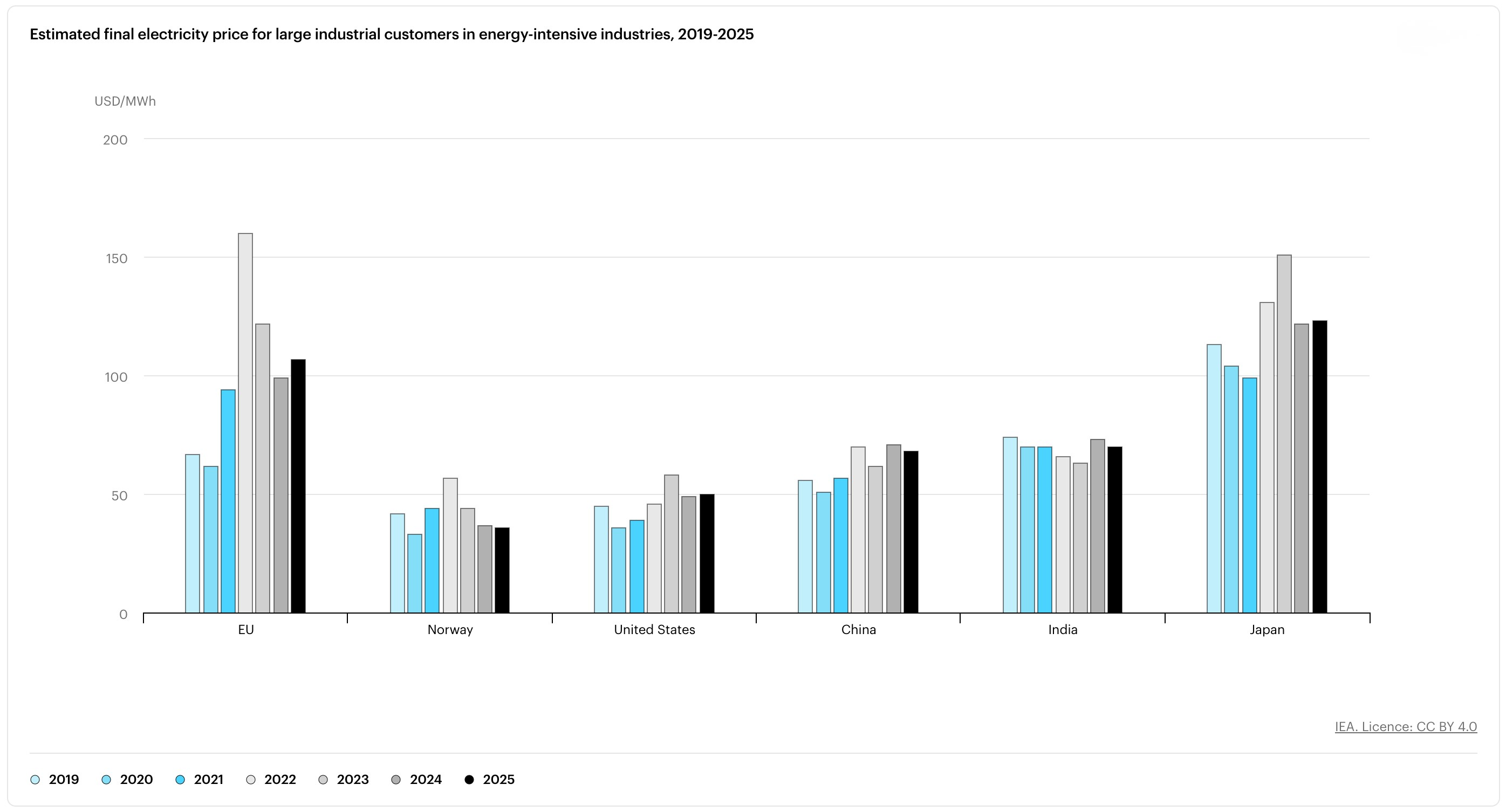
Energy is the most acute margin problem facing the German Mittelstand right now. For manufacturers, chemical plants, food and beverage producers, and logistics firms, to name just a few, electricity is a defining cost driver, and it is not getting cheaper. High electricity prices impact not only affordability and competitiveness but also pose a major obstacle to the electrification needed to realize energy transition goals. The industrial sector accounts for over 40% of Germany's total electricity demand.
At around 20 ct/kWh, German industrial electricity is above the EU average, more than twice US levels, and nearly 50% above China's. German grid charges for industrial customers have almost doubled since 2022. BESS, or battery energy storage systems, are built for exactly this cost structure. They charge when power is cheap and discharge when it is expensive, letting industrial operators control when and how they draw from the grid.
The case for industrial battery storage is strong. A correctly sized and operated system flattens demand peaks, cuts grid fees, stores cheap energy for use when prices spike, and trades surplus capacity into electricity markets to generate profit. For many commercial and industrial (C&I) companies, the numbers work clearly.
Getting there is the hard part. An industrial storage project is is far more complex than a residential install. You coordinate more than 10 stakeholders: grid operators, fire protection authorities, banks, electricians, planning engineers, permitting bodies, insurers, and the customer's own operations team. For a company whose job is making glass, brewing beer, or running a sawmill, that is months of distraction from the work it knows how to do. Most companies have not started because no one has made it simple enough.
encosa closes that gap.
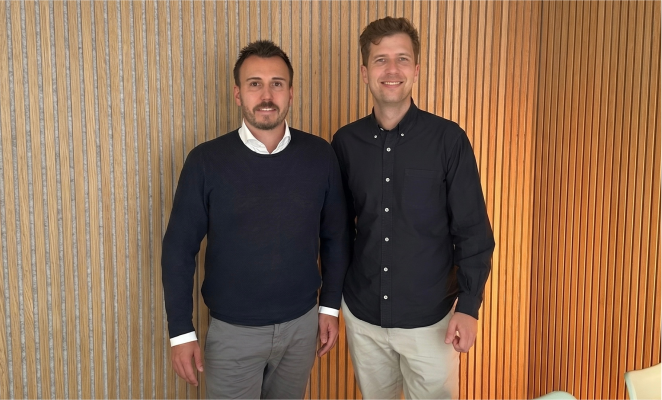
When we first met Sascha Koberstaedt and Sebastian Becker, both had already operated in capital-intensive hardware and battery infrastructure before encosa.
Sascha holds a mechanical engineering degree from KIT and a PhD from TUM. Before encosa, he founded EVUM Motors, an electric commercial vehicle maker that raised about €70M in equity and debt before a PE-backed exit. He knows how to sell capital-intensive hardware to industrial buyers, navigate certification and regulation, and run a company through the messy middle, where things break before they scale.
Sebastian spent - after strategy consulting at OC&C and EY-Parthenon - four and a half years at TWAICE, the battery analytics company serving clients like BMW, Audi, and Daimler, which has raised $75M to date. Having moved from business development to Director of Partnerships and Industry Strategy, he knows battery systems inside and out and how industrial buyers think about energy infrastructure.
This is an execution-heavy industrial business. It needs founders who know the market, know the product, and have already hit the obstacles that stop most people early. Sascha and Sebastian have that profile.
The C&I battery storage market in Europe is large and almost entirely untapped. encosa targets companies that use at least 100.000 KWh of electricity a year and spend more than €1M on power. That includes foundries, sawmills, chemical plants, food manufacturers, logistics warehouses, and construction firms. In Germany alone, the addressable segment spans tens of thousands of industrial sites.
The timing is unusual because several things are moving at once. Battery hardware costs keep falling, and projections show this will continue through 2030 and beyond. German regulation in 2025 and 2026, including the Solarspitzengesetz, changes to the Energiewirtschaftsgesetz, and the Bundesnetzagentur's MiSpeL framework, has made multi-use commercial storage economically viable for the first time under a supportive regulatory framework. The regulation has caught up with the hardware.
C&I storage today looks like where C&I solar sat a few years ago (a trajectory we covered in our solar tech piece here). Utility-scale and residential PV moved first. C&I lagged because the projects were more complex, and financing was not in place. encosa is positioned to lead the C&I wave, the way the strongest residential solar companies, such as Enpal and 1KOMMA5°, captured theirs.
Germany alone has over 100,000 potential customers, many with multiple sites. Whoever wins Germany has the clearest path into the rest of Europe.
"Battery storage is taking the German Mittelstand by storm. The question is no longer if, but how fast. encosa makes it easy for any company: cut energy costs, no effort, no risk, no own investment." Sascha Koberstaedt, Co-Founder and CEO, encosa
At pre-seed, encosa had already built significant customer interest, representing tens of MWh of capacity and millions of euros in project volume. That told us something: the team started selling in week one.
By the seed round that had compounded. encosa signed eight-figure project volumes and debt facility to fund the leasing model at scale. The debt facility enables flexible models for their clients, based on asset-backed financing.
In under two years, encosa went from founding to live assets, a signed pipeline in the tens of millions, and a financing structure that mirrors the best infrastructure-as-a-service models in adjacent sectors. By the seed close, the team had grown to cover every part of the value chain: commercial, technical, and operational.
How you operate a battery system determines its value, not the hardware itself. That is what separates encosa from the system integrators and hardware distributors that have circled this market for years without cracking it.
encosa's platform works on both sides of the meter. Behind the meter, the energy management system handles peak shaving, consumption optimization, and integration with on-site generation like photovoltaic. It smooths the demand peaks that trigger higher grid fees and stores cheap energy to discharge when power is expensive, continuously and automatically. AI is now running a growing share of these optimization decisions in real time, as explored in depth in our AI in energy piece here.
In front of the meter, the platform lets customers trade in electricity markets. The system charges when spot prices are low and discharges when they are high. For customers who qualify under Germany's 7,000-hour rule, the combination of optimized full-load hours and an 80-90% reduction in grid charges under StromNEV Section 19 changes the economics. A single 1 MWh system running on encosa's platform is projected to generate about €100,000 per year by combining behind-the-meter savings with trading income.
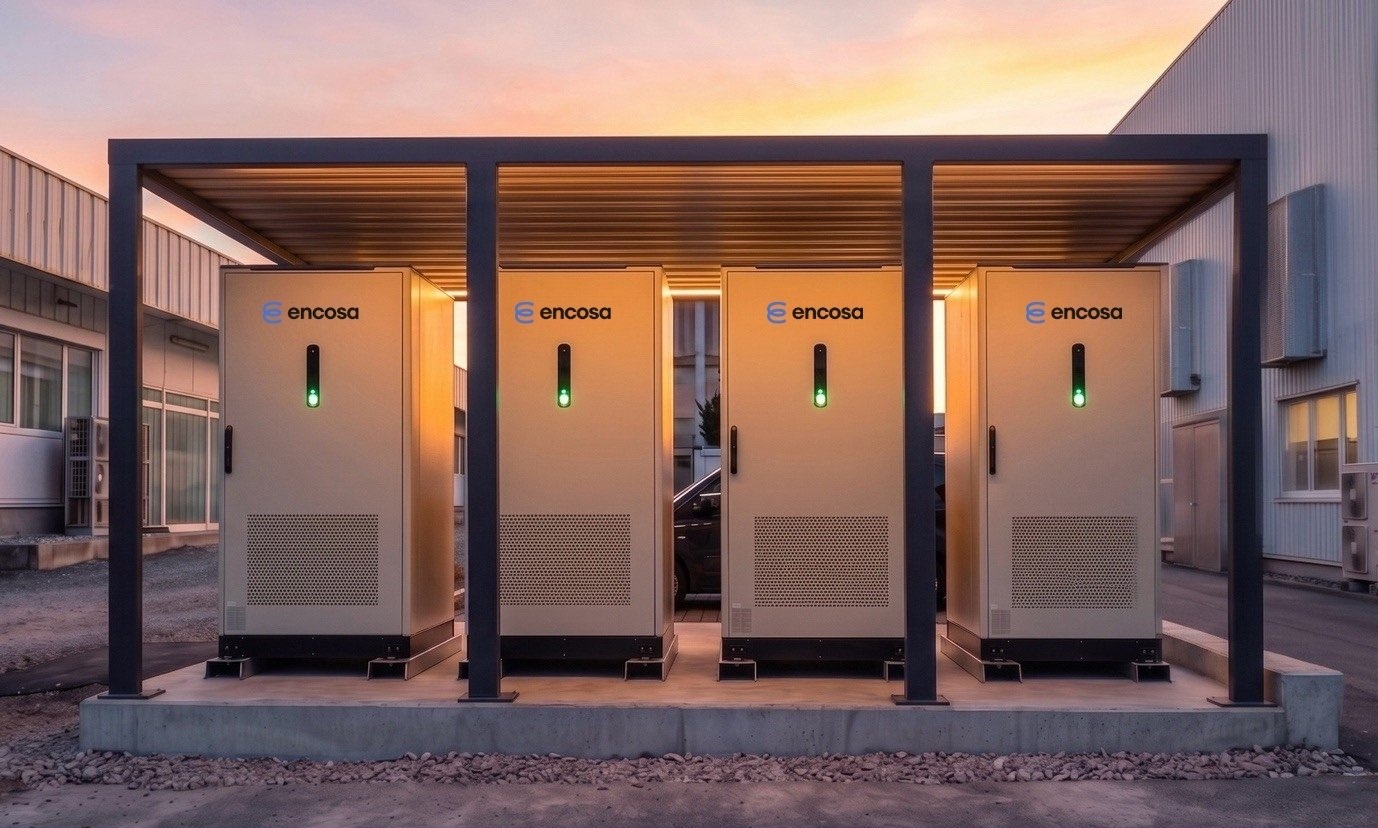
The planning layer is what lets encosa scale. By systematizing grid applications, regulatory approvals, certifications, insurance documents, connection plans, and logistics, encosa turns a bespoke, months-long process into a repeatable workflow. Those efficiency gains compound. That is how you handle hundreds, then thousands, of installations without growing headcount at the same rate.
"Storage projects are systematically underestimated. For Mittelständler, they are complex infrastructure projects — and the work does not end at commissioning. That's why encosa delivers not only savings from day one but also de-risks ongoing storage operations." Sebastian Becker, Co-Founder and COO, encosa
Recent research found that well-operated BESS reduced electricity procurement costs by 14.3% on average, with some companies exceeding 30%. They also cut grid fee payments by 41.6% on average. Beyond procurement costs, each megawatt of industrial storage in Germany is projected to avoid 140-200 tonnes of CO2 annually.
encosa's offers full-service project development, taking projects from analysis to commissioning. As it becomes bankable through proven project performance, the model expands. Customers can buy outright, rent for a monthly fee instead of a large upfront CAPEX commitment, or use a full Storage Energy-as-a-Service model.
For mid-market industrial companies, that changes the decision. With average payback periods of under four years, the economics work whether a company buys outright, leases, or opts for a full Storage Energy-as-a-Service model. The right structure depends on the customer: some prefer owning the physical asset, others want to preserve cash. encosa is built to serve both.
Long term, encosa becomes an asset management platform running a fleet of battery systems that generate recurring revenue through leasing, software, and energy trading, with the option to realize value through the infrastructure PE buyers now active in distributed energy assets.
At pre-seed, the case was clear: a large, underserved market; a seasoned founding team with the right mix of technical depth and operating experience; a business case that works for customers without a leap of faith; and a regulatory window starting to open.
The seed round confirmed it. encosa signed large projects, brought systems live, secured the financing the model needs, and built a team capable of running a genuinely complex operation.
The €25M seed round was joined by every pre-seed investor, including First Momentum. It gives encosa the financial resources to expand across Germany, build out the platform, and move toward the multi-use and virtual power plant capabilities that form the next layer of value.
The goal is to build Europe's leading energy storage solution for commercial and industrial companies: hardware-agnostic, software-led, and capable of orchestrating thousands of distributed assets across the continent.
"What we found most impressive about encosa is how deeply the team understands its customers' needs. That is reflected in the strong project wins already achieved. encosa also differentiates from competitors through its own technology, which makes battery operations more efficient and accelerates the return on investment for customers." Sebastian Böhmer, Founding Partner, First Momentum Ventures
Batteries are central to the industrial energy transition. They make PV more valuable, heat pumps more effective, EV charging more manageable, and grid participation viable for companies that never had access to those revenue streams. Whoever owns the installation, the software, and the operations for the Mittelstand's battery fleet holds a strategically important and durable position.
encosa is building that company.