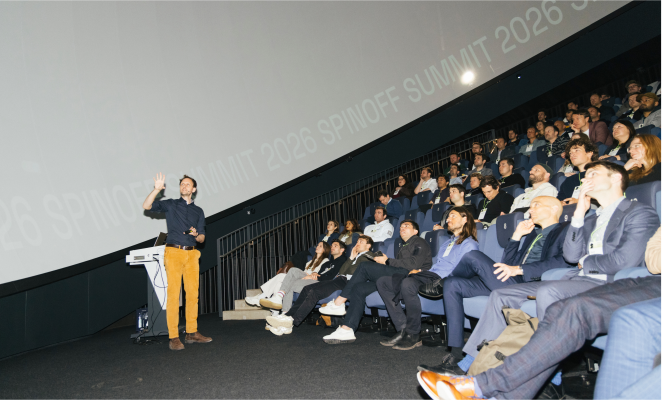
Jan Goetz and the IQM team have sold more quantum computers globally than anyone else on the planet. At the Spinoff Summit 2026, he walked the audience through how he got there: a postdoc at Aalto University, a hand-drawn cost list, and a conviction that quantum hardware was worth building as a company. Six years later, IQM Quantum Computers is valued at $1.9 billion (now at $2.5 billion market cap), operates in 15 countries, and completed a dual listing on Nasdaq in New York and Nasdaq Helsinki.
His story is not a Silicon Valley fairy tale. It is a technical founder's operating manual for the hardest kind of company to build: one where the product does not exist yet, the market has not been proven, and the timeline stretches into decades. For researchers weighing whether to make the leap from lab to company, Jan's path distills the decisions that matter most, and the ones that almost killed the company along the way.
Jan's first "business plan" was a cost list: lab equipment priced line by line, with no revenue model or TAM analysis, the way a physicist budgets a research project. When the first VC looked at it, the response was direct: "That's nice, but what happens if I give you €12 million?"
At the time, Jan was still on a postdoc contract at Aalto University, technically assigned to another project, but spending nearly all of his time building the company concept. The university was accommodating. The first act as a founder was taping a new sign on the lab door: "IQM Nest." Then he invited investors to visit.
That moment captures the identity shift every scientist-founder faces. The work changes from "here is my research" to "here is why you should invest." The audience changes from peer reviewers to people who need to believe a market exists, that this team can capture it, and that the timeline is survivable.
For researchers considering this path, the beginning is almost always unglamorous. Only about 1% of startups ever reach unicorn status. First-time founders have an 18% success rate, compared to 30% for serial entrepreneurs. The odds are harsh. But scientist-founders who start with validated IP, a deep technical moat, and an honest read of their market have an asymmetric edge over founders who are working backward from a slide deck.
We see this at First Momentum every year. The best pitches from our 100+ ecosystem Scouts rarely arrive as polished decks. They arrive as conversations with researchers who have spent years on a problem and are starting to realize that the next step is not another paper.
If there is one skill gap that separates the scientist who builds a company from the scientist who stays in the lab, it is storytelling, not marketing fluff, but the ability to translate a technical breakthrough into a problem that investors and customers recognize.
Jan learned this the hard way. Customers, he discovered, do not care about quantum effects. They care about cost, delivery time, and whether the system runs 24 hours a day. One customer's single biggest complaint about a delivered quantum computer was that the truck used to ship it was ugly. Another customer, a government minister, expected a photo in front of a golden machine. It was white. He almost walked out.
"Even though it hurts, you have to think about what the customer wants, not what is scientifically impressive."
Jan Goetz, CEO and co-founder, IQM Quantum Computers
The storytelling framework Jan used with investors combined two layers. First, the big picture: quantum computing will reshape pharma, finance, materials science, and energy. Second, the concrete pain point that makes an investor sit up: data centers now consume 1.2 gigawatts of power, Sam Altman has publicly suggested building nuclear plants to power AI infrastructure, and in cities like London, data center demand is already blocking housing construction projects. When the problem is personal to the person writing the check, the science becomes secondary.
For scientist-founders, the lesson is structural. Every pitch needs both a big vision and a tangible, felt problem. According to one analysis of the NSF I-Corps model in the us, founders must conduct at least 100 customer interviews before validating an invention's viability. That number is not arbitrary. It is the minimum needed to learn what customers actually care about, which is rarely what the scientist thinks they should care about.
IQM built their first quantum systems in rented office space. When no lab was available, the team rented the parking garage underneath, put compressors there, and drilled holes in the floor for cooling water. Jan's retelling: "The landlords didn't like this part of the story."
When investors and advisors said "you're crazy, you can't build your own cleanroom," Jan's response was simple: "I hear you, but we do it anyway." The result is Europe's largest quantum processor cleanroom, now a key competitive differentiator that anchors IQM's manufacturing capacity.
When the team started selling 5-qubit machines, the industry consensus was dismissive: you can simulate five qubits on a laptop, no one will buy these. What the critics underestimated entirely was the education and sovereignty markets. Universities needed real quantum hardware for training. Governments needed domestic quantum capability for strategic independence. IQM now leads global quantum computer sales.
These decisions share a pattern. They cannot be delegated. They cannot be validated by consensus. They require a founder who has the technical depth to assess the risk and the conviction to act on it.
Before raising the seed round, Jan went to people in his network and asked a simple question: "If we get money, will you join?" About 20 people said yes. They received shares for free, before any formal valuation. Many are still with the company today.
This approach skipped the hardest phase of early-stage hiring entirely, bypassing job postings, cold outreach, and the painful process of convincing strangers to join an unproven startup. The team had critical mass before the round closed.
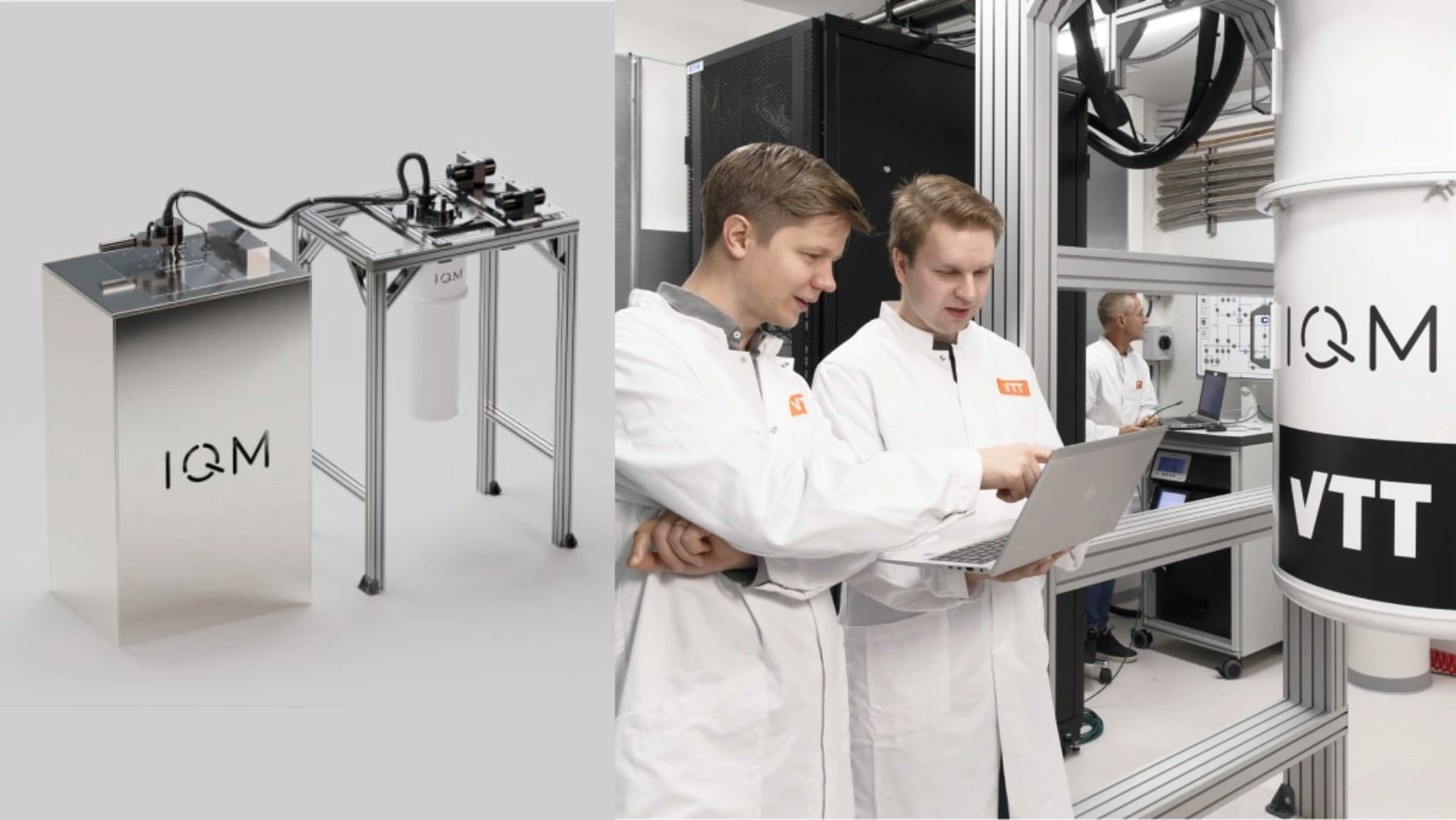
The data support this instinct. Startups with two co-founders see 30% more investment and 3x the customer growth rate compared to solo founders. Team composition is the single strongest predictor of early-stage survival.
But assembling a team of PhDs does not mean the team works. Jan's biggest hiring mistake was assuming that "if I like this person and I like that person, they will also like each other." Cultural fit between hires matters as much as individual quality. Corporate leaders who claim flexibility often struggle with the chaos of an early-stage startup after years in structured organizations.
At around 50 employees, IQM started hiring non-technical staff, and building a culture bridge between quantum physicists and marketing professionals required deliberate effort. Jan's prescription: you cannot over-communicate. "There's a saying that you have to repeat things at least seven times in a row," he told the Spinoff Summit audience.
The Spinoff Summit exists specifically to address this problem: helping researchers build founding teams and investor connections before they raise.
"A deep tech company takes 7, 10 years, I don't know how long to really make it fly. It cannot be a sprint, it must be a marathon."
Jan Goetz, CEO and co-founder, IQM Quantum Computers
IQM raised its early rounds in 2019, when interest rates were near zero and venture capital was plentiful. Then rates rose, VC dried up, and COVID slowed development timelines. Cash runway started shrinking: 12 months, then 9, then 6. "This is when you really start thinking," Jan told the audience.
The technology sector has a 63% failure rate within five years, the highest of any industry. Deep tech compounds the problem: development cycles stretch longer, and capital requirements grow well before revenue arrives. In 2024, only about 40 out of roughly 1,300 venture-backed companies valued at $500 million or more achieved successful exits. The exit bottleneck is real.
Jan's coping mechanism is literal: marathon running. "It's about endurance, resilience, and constant pace." David Friedberg, an Astrophysics graduate from UC Berkeley who built Climate Corporation and sold it for $1 billion, frames the mindset as a scientific problem: "Identify the unknown. Mitigate the unknown. Only then can you enable the outcomes you want."
IQM's answer is roadmap-driven planning. A published roadmap extending into the 2030s gives engineers structure, gives investors confidence, and creates accountability milestones. Jan also emphasized something that rarely appears in startup advice: celebrate milestones. "As founders, when we achieve something, we already have 10 other things on our plate." Sustaining a team over a decade-long build requires forced reflection.
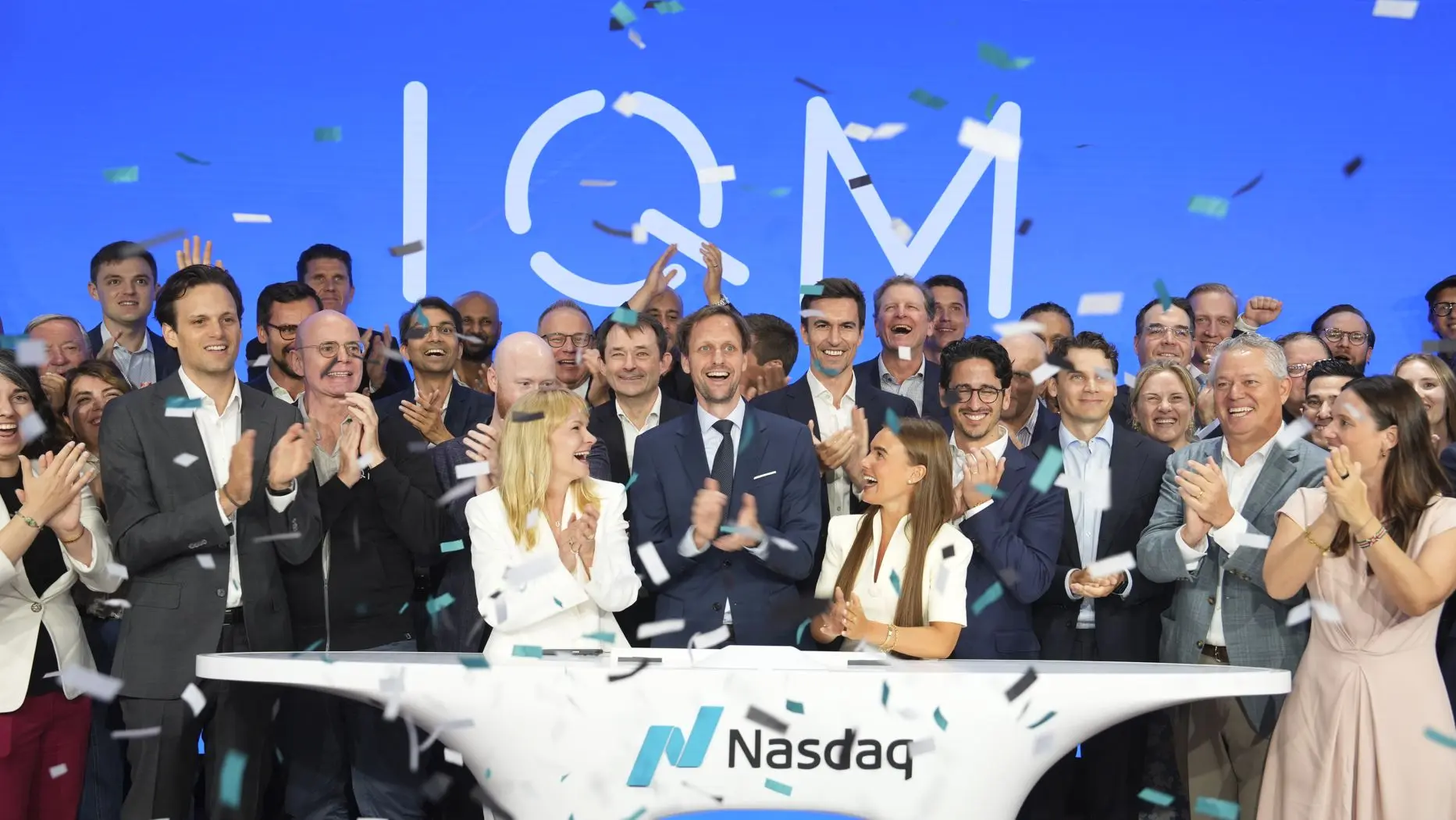
Jan Goetz went from taping a sign on a university lab door to ringing the bell on a dual listing in New York and Helsinki. The path took over six years and was far from clean.
The science was the starting point, not the destination. Everything else, the storytelling, the team, the bold bets, the endurance, had to be built from scratch. For deep tech founders, copying the software startup playbook can be a company-killing move.
For researchers considering the same path, the support infrastructure across Europe is stronger than ever. EXIST in Germany funds founding teams from universities and research institutions, while ERC Proof of Concept grants help researchers explore the commercial potential of their work. The EIC Accelerator offers a further route for scaling deep tech ventures with EU backing, and UnternehmerTUM anchors a well-established path from lab to company in Germany.
Beyond Germany, ETH Zurich and EPFL now lead in Europe's alumni-founded, VC-backed deep tech spinouts, a sign of how much the wider European ecosystem has matured. Platforms such as the Spinoff Summit help scientists navigate the transition before they raise capital.